How Much Is the U.S. Really Making on the Ukraine War?

How Much Is the U.S. Really Making on the Ukraine War?
While the world debates aid packages, allied nations have been quietly writing checks — from their own treasuries — directly to American defense contractors.
By Lisa Courtney | The Elephant Method | June 2026
Ask most people how much the United States is making from the war in Ukraine, and they will talk about aid packages, congressional debates, and foreign assistance bills.
That framing misses the larger story entirely. The real money is not moving through Washington's budget. It is moving through procurement contracts — sovereign nations spending their own national wealth at American factories.
Since Russia's full-scale invasion of Ukraine in 2022, U.S. allies have committed approximately $170 billion to American-made military hardware — driven by a massive rush to replace older gear sent to Ukraine and fortify their own borders against regional threats. None of this money passed through Ukraine. None of it required a vote of the U.S. Congress. These sovereign nations dipped into their own domestic tax pools, wrote contracts directly to the U.S. Department of Defense, and transferred their country's wealth into American factories.
"None of this money passed through Ukraine. These sovereign nations dipped into their own domestic tax pools and transferred their country's wealth into American factories."
Germany: Roughly $17–$20 Billion Sent to the U.S.
Germany offers the clearest window into how this rearmament boom works. After launching its €100 billion Zeitenwende military modernization fund in the wake of Russia's invasion, Germany reversed decades of under-spending and directed its first major checks straight to Washington. In total, Germany has committed roughly $17billion to $20 billion USD to the U.S. for high-end military hardware since 2022 — out of approximately $130 billion USD (€111 billion) in total weapons contracts signed across all global suppliers.
F-35 Fighter Jets: ~$11.3 Billion
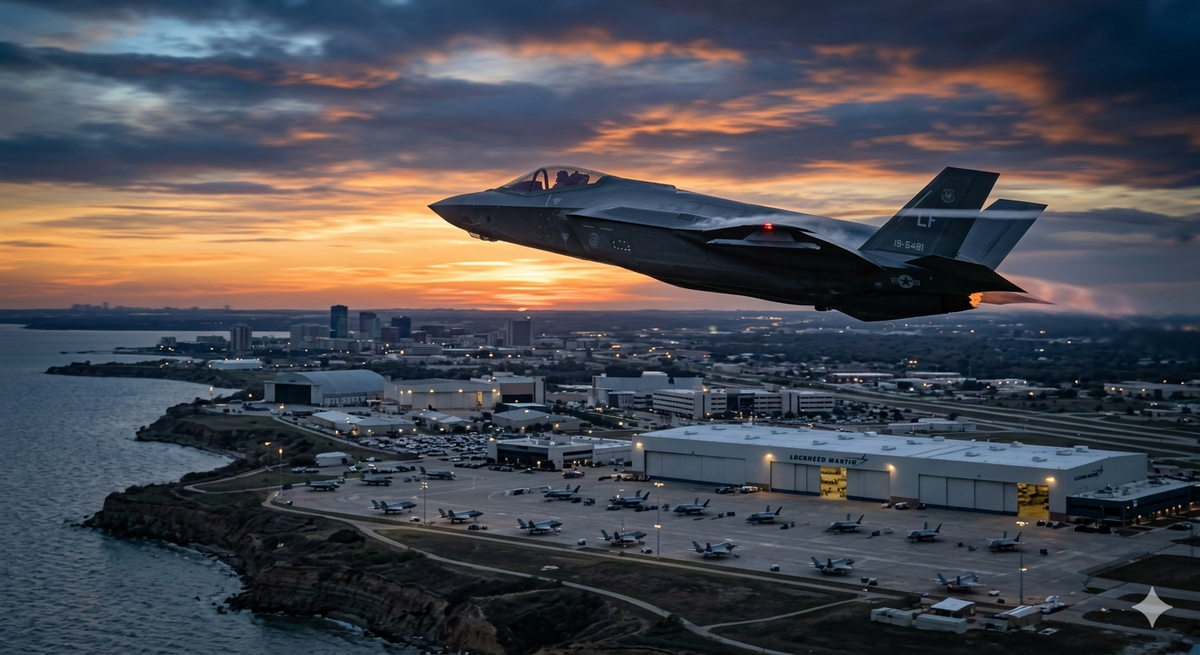
The largest single chunk went to Lockheed Martin. In late 2022, Germany finalized an $8.4 billion deal to purchase 35 F-35A Lightning II stealth fighters to replace its aging Tornado fleet. Germany then moved to order an additional 15 F-35s for roughly $2.9 billion, bringing the total fighter jet commitment alone to over $11 billion — all flowing to Lockheed Martin facilities in Fort Worth, Texas.
Patriot Missile Air Defense Systems: ~$5 Billion
Stung by the reality of missile warfare in Ukraine, Germany has heavily reinforced its air defense. Through the U.S. Foreign Military Sales (FMS) program, Germany signed a $5 billion contract for upgraded PATRIOT Advanced Capability-3 (PAC-3) missile segments — to replace stock it sent to Ukraine and modernize its domestic defense shields.
Chinook Heavy-Lift Helicopters: ~$8.5 Billion Total Program
Germany agreed to purchase 60 Boeing CH-47F Chinook helicopters to replace its ancient fleet of transport choppers. While the entire lifetime program package — including decades of maintenance and U.S.-based training — is valued at up to $8.5 billion, the initial procurement and manufacturing contracts represent billions sent directly to American aerospace factories.
Advanced AMRAAM Missiles: ~$1.23 Billion
Germany secured a $1.23 billion deal with the U.S. for up to 400 advanced AIM-120D-3 air-to-air missiles and related support systems — specifically to arm its new F-35 fleet.
Germany's Major U.S. Defense Contracts Since 2022
Contract Supplier Value35 F-35A Lightning II Jets Lockheed Martin $8.4B
15 Additional F-35A Jets Lockheed Martin $2.9B
60 CH-47F Chinook Helicopters Boeing $8.5B
PAC-3 Patriot Missile Systems Raytheon / U.S. FMS $5.0B
AIM-120D-3 AMRAAM Missiles U.S. FMS $1.23B
TOTAL TO U.S. INDUSTRY ~$17–20B
The Global Buying Spree: Where Else Is the Money Going?
Germany is not alone. The U.S. State Department's Foreign Military Sales (FMS) program and SIPRI database track how a global total of approximately $170 billion in allied purchases breaks down by country. The spending is driven by a collective scramble to replace older gear sent to Ukraine and fortify borders against regional threats.
Poland: ~$45 Billion
Poland has single-handedly been the largest European customer for U.S. defense contractors, using its own national treasury to completely replace its legacy Soviet equipment with state-of-the-art American systems: $12 billion for 96 Boeing AH-64E Apache attack helicopters; $6.1 billion for 250 M1A2 Abrams main battle tanks; $10 billion for HIMARS long-range mobile rocket launchers; and over $12 billion for Patriot missile batteries and Lockheed Martin F-35 stealth fighters.
Japan: ~$18 Billion
Nervous about escalating tensions in the Pacific, Japan tore up its historic pacifist spending caps and dipped heavily into its national budget to buy American long-range deterrents: $2.35 billion for up to 400 Tomahawk cruise missiles; over $10 billion in ongoing multi-year contracts to build the largest fleet of F-35s outside the United States; and $1.4 billion to upgrade its airborne early-warning surveillance network with E-2D
Hawkeye radar planes.Australia: ~$12 Billion
Australia focused its domestic taxpayer dollars on heavy offensive and transport platforms built in the U.S.: $4.8 billion for 20 C-130J-30 Super Hercules tactical cargo planes; over $2 billion for HIMARS and advanced guided missiles; and billions more on American M1A2 tank variants and combat engineering vehicles.
Czech Republic & Romania: ~$10.5 Billion Combined
Both eastern-flank nations completely abandoned their aging Soviet-era MiG fighters: the Czech Republic committed $5.6 billion for 24 brand-new F-35 stealth fighters, while Romania combined deals totaling nearly $5 billion for F-16 upgrades, new Abrams tanks, and coastal defense missile systems.
The Baltic States, South Korea, Taiwan, and Others: ~$59.5 Billion
Estonia, Latvia, and Lithuania spent a combined $4.5 billion strictly on American HIMARS, counter-drone radars, and Javelin anti-tank systems — extraordinary figures from small national economies. South Korea and Taiwan combined for over $15 billion in purchases ranging from Apache helicopters to advanced naval missiles and F-16 upgrades. The Netherlands, Norway, and the UK contributed another $20+ billion to finish outfitting their collective air forces with American-made missiles, smart bombs, and ongoing maintenance infrastructure.
The Structural Reality
When a country buys an F-35, it is not buying a jet. It is buying maintenance contracts, pilot training, spare parts, and software updates from American companies for the next 30 years. When it buys Patriot missiles, it locks its air defense doctrine into a U.S.-managed ecosystem. These are not one-time transactions — they are generational commitments.
The war in Ukraine did not simply create a humanitarian crisis. It created the conditions for the largest transfer of allied national wealth into American defense industry in modern history. Lockheed Martin, Boeing, Raytheon, and General Dynamics are not bystanders to this conflict. They are among its primary financial beneficiaries — not because offoreign aid, but because frightened governments around the world decided that American hardware is the only hardware they trust.
The next time someone asks what the United States is getting out of the Ukraine war, the answer is not found in a debate about aid. It is written in $170 billion worth of procurement contracts — and counting.
Lisa Courtney is an intercultural communication specialist and founder of The Elephant Method.
She works with non-native English-speaking professionals across 40+ countries. theelephantmethod.com
Sources
• U.S. State Department Foreign Military Sales (FMS) Program — public notifications database
• SIPRI (Stockholm International Peace Research Institute) — arms transfers database
• Military.com — '$170 Billion Global Buying Spree of U.S. Weapons by Allies'
• Bruegel — FMS dataset tracking U.S. defense sales by purchasing country
• U.S. Defense Security Cooperation Agency (DSCA) — individual country sale notifications