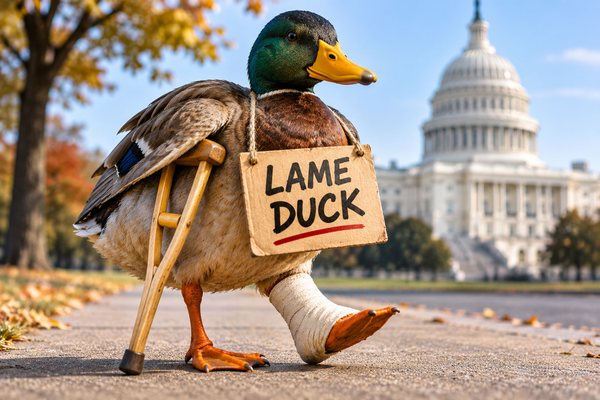
The Rules of War: The Weaponization of Words

How Superpowers Use Language to Strip Nations of Their Generational Wealth—And Why Ukraine Must Speak Victory Into Reality
Dear Mr. President,
My heart sank as I watched you take a beating in the Oval Office. It was like nothing I had ever seen before. Two of the most powerful men in my country teamed up against you—a man fighting for his life and the lives of his countrymen. On February 28, 2025, the Oval Office ceased to be a room for global diplomacy. It became a reality TV show.
I watched the live broadcast with a growing sense of horror as Donald Trump and JD Vance systematically tag-teamed you, Ukrainian President Volodymyr Zelensky. It wasn't a policy debate. It wasn’t even a negotiation. It was a calculated, televised ambush meant to send a message to the rest of the world: don’t go against us.
This linguistic trap deliberately brought a wartime hero onto a hostile stage without a translator, knowing the duo had the upper hand. Trump and Vance’s intention was to make you look weak and ungrateful so they could force you to succumb to their own agenda. Under the crushing cognitive load of rapid-fire comments, interruptions, and being told “no, you can’t speak,” Mr. President, you didn’t have a chance.
When Trump wielded his munitions—an American idiomatic phrase: "You don't have the cards right now"—you looked like a deer in the headlights.
Trump: “You’re not in a good position. You don’t have the cards right now. With us, you start having cards.”
Zelensky: “I’m not playing cards. I’m very serious, Mr. President. I’m very serious.” (Transcript of the 2025 Trump–Zelenskyy meeting, 2025, paras. 5–6)
To a native speaker, the phrase is standard and references leverage. But under the intense pressure of the room, it appeared that you translated literally, fell right into their trap, and took the bait, entirely unaware that you were the target of the bullies in the White House. Instead of clarifying like an upstanding professional politician would do, Trump ruthlessly and immediately twisted the misunderstood words back to you and snapped:
Trump (loudly): “You’re playing cards. You’re gambling with the lives of millions of people. You’re gambling with World War III!”
Zelensky: “What are you speaking about?” (Transcript of the 2025 Trump–Zelenskyy meeting, 2025, paras. 7–8)
My thought at that exact moment was… You were invaded! You didn’t have a choice. And still, as the Ukrainian commander-in-chief, you sat there, kept your cool, and behaved like a true president.
It was a devastating linguistic execution. It was hard to watch. In that precise moment, I saw how easily a brilliant, courageous mind can be entirely stripped of his power, neutralized by a native speaker who cares more about creating "great television" than the dignity of another human being. It was the exact day I stopped watching the news, and the exact moment I committed my life to building communication armor for non-native professionals around the world.
When you, President Volodymyr Zelensky, walked into the Oval Office of the White House on February 28, 2025, I bet you didn’t expect to get a gut-punch on national television. Seeing a man at war looking for a strategic way to save his countrymen, but finding a room that had already been rigged against you, was almost more than I could bear.
Even a skilled American delegate couldn’t have kept up with the interrogation tactics used by Vance. By switching from a demand for gratitude to a political grievance by the Republican Party because you lobbied for the support of Western allies in October 2024, Vice President Vance had you jumping through hoops like a trained circus dog. You had no way of tracking the conversation due to the rapid-fire method administered.
Vance: “No, in this entire meeting, you said thank you? You went to Pennsylvania and campaigned for the opposition in October.”
Zelensky: “No. What are you speaking about?”
Vance: “Offer some words of appreciation for the United States of America and the president who’s trying to save your country.”
Zelensky: “Please. You think that if you will speak very loudly about the war, you can–” (Transcript of the 2025 Trump–Zelenskyy meeting, 2025, paras. 12–15)
JD Vance and Donald Trump initiated this calculated tag-team assault without the approval of the American people. When Vance tried to force-feed "thank yous" down your throat, that was not the American people. When Trump tried to belittle you, a wartime soldier, by saying you were reckless and unwilling to do what was best for your country, this is not how Americans treat men and women in the armed forces. The current sitting American president may have the power to treat others like dirt, but that doesn’t make it right.
Soldiers, no matter what country they come from, deserve our respect. Presidents, from outside our borders, should be treated as honored guests. This is not my America anymore. This is the Donald Trump show.
The Second-Language Trap: Engineering a Public Spectacle
It is hard enough to deal with bullies when you are speaking the same language, but it is a thousand times more challenging when you are operating in a second tongue. In that televised Oval Office ambush, Trump and Vance did not want a private negotiation; they wanted a public spectacle. They needed the cameras rolling to broadcast a message of pure dominance to their domestic audience, and they knew they held the ultimate home-field advantage: the English language.
You were operating under the crushing cognitive load of being a wartime leader, yet you were forced to litigate your nation's survival in a language that wasn't your own. You were trying desperately to shed light on historic structural documents, but you lacked the immediate, fluid linguistic command to seize control of the room.
This agonizing disconnect—the pain of trying to shed light on historical truths while the person across from you completely shuts their ears—is a trauma you know all too well. Mr. President, this is the exact same crushing weight your closest allies, the Polish people, feel right now. When you issued the decree naming a military unit after the UPA, a group deeply tied to the historic slaughter of ethnic Poles, our friends in Warsaw felt completely unheard, dismissed, and pushed into a defensive corner—just like you were in the Oval Office.
If we ever want to defeat the true enemies who rob us all blind through corporate backdoors, we cannot inflict the same historical blindness on our friends that the superpowers inflicted on you. We must listen to each other to unite against our common foe, rather than turning on each other.
I’m sure you are aware that there are two documents that you could have referenced during your meeting on the 28th: The Budapest Memorandum of 1994 (Budapest Memorandum, 1994) and The Minsk Agreements (UN Security Council, 2015).
Budapest Memorandum (1994) — Russia promised:
- Respect Ukraine's borders
- Never use force against Ukraine
- Never use economic coercion against Ukraine
- Consult Ukraine if any issue arose
Minsk II (2015) — Russia promised:
- Immediate ceasefire
- Withdraw heavy weapons
- Release all prisoners
- Allow humanitarian aid
- Remove all foreign forces from Ukrainian soil
If you had the strategic communication framework to master the conflict, you could have handled it entirely differently. In my experience, direct, simple communication works best during these situations. Besides stating these facts, you could have said:
“Mr. President—your country co-signed the document that started all of this. Russia has violated every agreement we have ever signed with them. Why would negotiations now be any different?”
Sometimes in communication, especially in high-stakes situations, it is imperative that we practice beforehand and attempt to simulate what questions could be asked. Your team could have provided you with notes to refer to make sure you hit all of your talking points. They could have done role plays with you and practiced slowing down the pace so that you could ask clarifying questions. They could have taught you how to hold firm on one talking point before allowing the room to move forward without you.
Operating under that level of intense stress left you with zero cognitive bandwidth. Even the best debaters would have struggled without preparation. My government successfully manipulated a non-native speaker into defending his manners rather than weaponizing his legal leverage, completely burying a historic security memorandum—which bartered away a multi-billion-dollar nuclear arsenal for a mere $350 million in implementation aid—under a childish, loud demand for a "thank you" (Clinton & Kuchma, 1994).
Back then, Ukraine had choices; they could have played dirty. They could have taken those 1,900 warheads and sold them on the black market to a country like Iran for billions of dollars in cold, hard cash. Instead, they chose to behave like an honorable global neighbor. They traded the ultimate military shield for a piece of paper and a seat at the international table, only to be left completely out to dry decades later by the very superpowers they trusted.
The Global Superpower Playground
This linguistic ambush in the Oval Office is not an isolated incident; it is the macro-application of a primitive, lawless playground dynamic that defines modern geopolitics. We are witnessing first- and second-world superpowers completely strip away the illusion of civilized global diplomacy, reverting instead to raw, unadulterated bullying tactics to command the stage and freeze their opponents.
Look at the mechanics of the current geopolitical arena:
- Putin’s Nuclear Blackmail: Russia consistently issues devastating threats of nuclear deployment. By lowering its official threshold for nuclear use, the Kremlin triggers a visceral nervous system freeze in Western leaders, forcing them to self-censor and hesitate out of fear of escalation.
- Trump’s Annihilation Doctrine: On the other hand, Donald Trump wields the classic "Madman Theory" like a blunt instrument, issuing stark threats of absolute annihilation against Iran, declaring that "a whole civilization will die tonight." It is the instant escalation from zero to one hundred designed to induce sheer panic, forcing targets to submit to his terms.
By Kim Scott’s (2024) definition in Radical Respect, this is the ultimate manifestation of bullying: the instinctive use of status and power to harm, humiliate, dominate, or coerce (Chapter 1, "Bullying: Combat Intended Harm"). There is no deep, sophisticated ideological doctrine behind these actions; it is a calculated strategy of performative cruelty.
Whether it is a native English speaker trapping an ally in the White House or a superpower threatening to vaporize a nation, the goal remains identical: strip the target of time, logic, and leverage, forcing them to react to the sheer terror of the threat rather than the actual facts.
The Profit Trail and Chokepoints: Why the Stage Stays Toxic
The most dangerous delusion in modern diplomacy is believing these superpowers want stability. They don't. When Donald Trump tells the targets of geopolitical bullying to simply "get over it," he is actively normalizing a toxic environment because that exact toxicity is staggeringly profitable. Behind the theatrical cruelty on the global stage lies a cold, calculated cash flow: the world’s dominant powers rake in billions by exploiting wartime chaos and choking the planet's vital maritime channels.
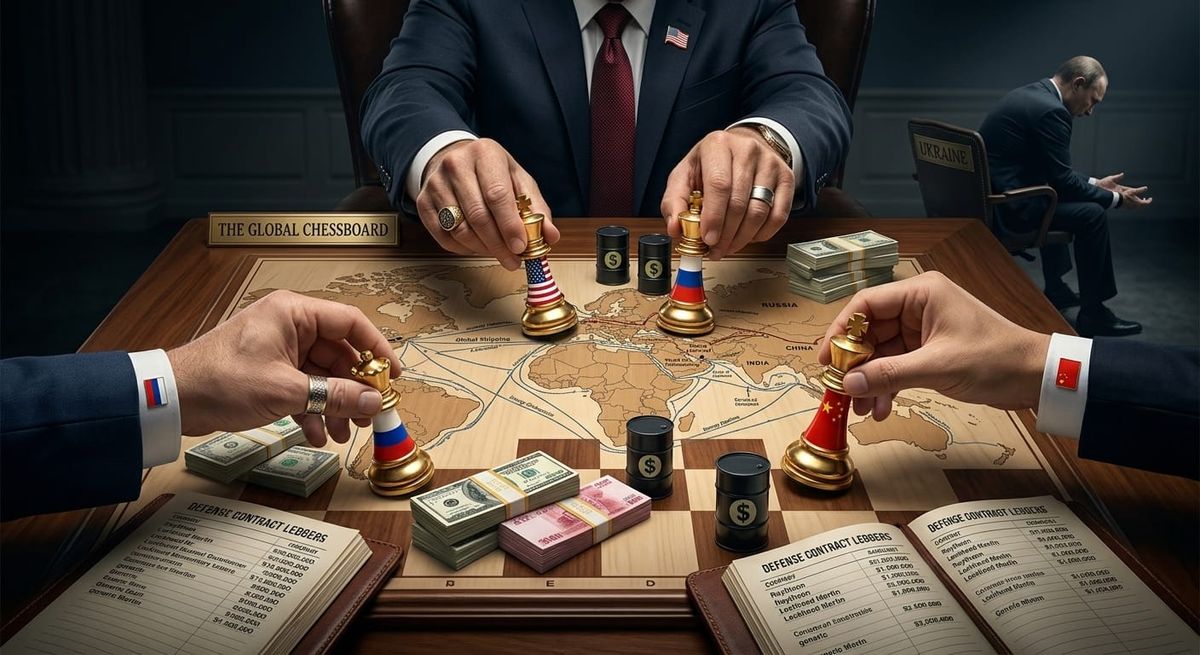
To understand why the stage stays toxic, we must look beyond Europe and observe how the superpowers treat the globe as an interconnected chessboard.
There have been some staggering financial windfalls captured since the outbreak of the Iran War:
- Russia's Fossil Fuel Jackpot: With the Strait of Hormuz heavily contested and 20% of the world's energy transit choked by naval warfare and sea mines, global oil prices skyrocketed (U.S. Energy Information Administration, 2026). This manufactured panic allowed the Kremlin to bypass Western sanctions, yielding a historic fiscal windfall of up to $9.5 billion per month in additional energy revenues to directly refill its war chest (Bloomberg, 2026).
- China's Clean-Tech Monopoly: While Beijing burns through its crude reserves, it has capitalized brilliantly on the global "fossil shock." By doubling its alternative energy exports to a record 68 gigawatts of solar technology in a single month (Ember, 2026), the Chinese government is capturing up to 85% of the global green-tech and EV supply market (International Energy Agency, 2026).
- The United States' Double Play: While everyday American citizens bleed cash at the gas pump, private U.S. energy producers hit all-time export records of 5.2 million barrels of crude a day to offset the global deficit (U.S. Energy Information Administration, 2026). Simultaneously, the U.S. government cashed in via record-breaking public land oil leases and emergency petroleum contract premiums, pulling billions into the U.S. Treasury (U.S. Department of the Interior, 2026).
This brings us to the ultimate paradox of global chokepoints, from the Strait of Malacca to the Strait of Hormuz. Superpowers shout about international law and maritime treaties like UNCLOS when it suits their public narrative, but on the battlefield, laws are thrown out the window. Iran drops blind sea mines for survival, the U.S. Navy deploys counter-blockades, and Russia feeds Tehran high-grade intelligence to keep the crisis burning.
Why end the war? Why stop the bullying? The three largest nations on Earth are getting exponentially richer off the instability.
The Courteous Defeat: Europe’s Old Rules vs. The New Playbook
This is the grim reality of the modern global order: while the three largest nations on Earth get exponentially richer off orchestrated instability, European governments are playing small within the rules. The world stage has split into two entirely different games. On one side, you have the traditional, polished theater of Europe.
We watch King Charles III of the United Kingdom conduct formal state visits to America, draped in historical pageantry, delivering elegant speeches on shared heritage, and adhering to strict diplomatic protocols. Then we see President Emmanuel Macron of France staging highly choreographed, sophisticated walks through the crowded streets of New York, engaging in polite handshakes and a charm offensive designed for Western media approval. They conduct themselves with impeccable couth.
But proper manners do not stop sea mines, and polite protocol does not defuse an ambush.
While Europe clings to the gentlemanly codes of a bygone era, Donald Trump and Vladimir Putin operate entirely outside of them. The bullies do not look at King Charles's royal pageantry or Macron's diplomatic walkabouts and see strength; they see a tactical vulnerability to be exploited. They view Western adherence to traditional etiquette as a weakness that makes them slow, predictable, and basically sitting ducks.
By treating international relations like the Old West, with guns blazing, the superpowers manipulate the polite hesitation of European leaders to completely hijack the narrative, choke off global maritime chokepoints, and freeze their opponents.
While European leaders are busy playing the part of the refined statesman, Trump and Putin are actively rewriting the borders, dictating the financial terms, and draining the global treasury. By refusing to adapt to the raw, visceral mechanics of modern conflict resolution, the old guards of diplomacy are systematically losing their grip on the world stage.
The Global Blueprint: Master the Playbook, Own the Stage
European leaders and institutions are losing ground to a new geopolitical scene where dominant native speakers are taking advantage of their linguistic dominance to control the room and rob non-native speakers of their confidence, leverage, and resources. This is why a Strategic English framework is necessary to stop the bleeding and bring the power balance back so that the global superpowers don't continue to dismantle the foundation of European culture.
Trump, being the marketing genius he is, understands the modern media landscape doesn't reward correctness; it rewards dominance. If Europe, non-native English-speaking leaders, and global professionals ever want to step out of the shadows and onto the playing field, they must stop using old rules of etiquette and master the new playbook of Strategic English.
To dismantle an ambush and reclaim the home-field advantage, you do not need to speak louder or more politely. You need to build Communication Armor using three tactical tools:
1. The Tempo Shield (Cognitive Buffer)
Bullies rely on rapid-fire pacing to overwhelm your nervous system and drain your cognitive bandwidth. The Tempo Shield is the art of deliberately slowing down the clock. When players like Vance or Trump flood the room with aggressive, stacked questions, a trained leader must never rush to answer.
You execute the shield by deploying a localized anchor phrase:
“This feels like a very complicated topic. Let me make sure I'm understanding you clearly.”
From there, repeat back the other party’s words to the best of your ability. This buys time and gives you ample processing power to formulate your response. By forcing a pause, you preserve your cognitive bandwidth, reset the room’s heart rate, and refuse to let the native speaker dictate the speed of the engagement.
2. Direct English (Linguistic Evacuation)
When a native speaker drops a weaponized idiom like "You don't have the cards," the worst thing a non-native professional can do is take it literally and defend the metaphor. Direct English is your tool to escape the linguistic trap.
Instead of saying "I'm not playing cards," you must instantly discard their slang and demand clarity. By refusing to play their word games, you strip the bully of his semantic smoke screen and force the conversation back to firm ground. Asking for clarification is a strength, not a weakness; in high-stakes communication settings, we cannot afford to guess what someone is trying to say. Therefore, you must pin them down and be specific:
“Can you explain exactly what you mean by playing cards?”
That is how you stop the gloss-over and get the room back on track.
3. The Fact Lever (The Budapest Model)
Superpower bullies use tone-policing to force you into defending your manners rather than your rights. The Fact Lever bypasses their childish demands for a "thank you" by anchoring your position in undeniable, structural contracts.
Instead of pleading or listing past gratitude, you drop the weight of historical data on the table. You invoke the hard assets by name:
“We signed the Budapest Memorandum, and we signed the Minsk agreement. We handed over the world’s third-largest nuclear arsenal in exchange for sovereignty, only to find out those documents were completely worthless when our borders were invaded. Until I receive a document that reflects a 100% enforceable guarantee of Ukraine’s protection, there will be no negotiating.”
At that point, you walk out. This is the Fact Lever.
Reclaiming the Arena
English is Power. With English, you can get a better job, move or travel to another country, negotiate higher wages or a great deal, or take college exams to avoid going to war. What English can also do is protect your generational wealth from leaving your country, and it can give you the skills you need when you are facing bullies in the White House.
One word or phrase can make all the difference in the world. Whether it’s the word “assurance” used to make you feel all warm and fuzzy when you sign a memorandum to provide sovereignty for your nation, or a statement like, “You don’t have the cards right now,” used to manipulate or exploit you for your country's resources. This power was used in the signing of the historical document known as the Budapest Memorandum of 1994, where the superpowers persuaded Ukraine through intimidation to accept these terms. It is easy to see how a gap in translation can carry enormous geopolitical consequences even decades later.
No bully, no matter how powerful, has the right to manipulate a room or make a leader fighting for survival look small. Witnessing that televised execution on February 28, 2025, made it entirely clear that standard diplomacy is dead.
The global public is trapped in a selective amnesia. We watch sanctions get slapped on Russia for its illegal invasion of Ukraine, only to look away the moment the war in Iran dominates the headlines. But this distraction is precisely where the profit lies. The Middle Eastern escalation triggers massive oil-revenue windfalls for Moscow, handing Putin the exact financial runway he needs to sustain his war of attrition against Kyiv. In return, Russia feeds intelligence back to Iran to perpetuate that conflict, keeping the loop spinning.
Meanwhile, across the Atlantic, Washington watches the theater unfold with quiet satisfaction. Because as the conflict drags on, Ukraine is forced to hemorrhage its own natural resources and rely on billions of dollars funneled from allies like Germany, the United Kingdom, Denmark, the Netherlands, and the G7—only to spend those massive sums on American military defense systems. It is a brilliant, vicious heist: the world's three largest superpowers are getting exponentially richer off calculated global instability, while the sovereignty and citizens of smaller nations are systematically liquidated.
Why end the wars? Why stop the bullying? When you control the theater, peace is a bad business model.
The Final Cut: Our Shared Reality
The superpowers aren't just watching the chaos—they engineered the stadium, they own the tickets, and they are getting filthy rich off the blood in the water. The tragic truth isn't that Europe is weak; it’s that Europe is hopelessly obsolete. While Washington and Beijing play a ruthless, lightning-fast game of geopolitical chess, European leaders are still sitting in committee meetings, polishing their centuries-old silver, and suffocating under their own polite etiquette. They aren't just outmatched; they are being eaten alive.
No matter how the politicians spin it, the reality is written in our blood and our bank accounts. We—the everyday people of Ukraine, Russia, Iran, and the United States—aren't the ones winning here; we are the ones suffering. We are the ones burying our children, watching our communities turn to rubble, and drowning under hyper-inflated fuel rates and skyrocketing grocery prices.
Meanwhile, the military-industrial complexes and energy giants of the superpowers are lining their pockets with record-breaking profits extracted directly from our pockets. This isn't an accidental tragedy; it is a calculated drain on our global resources. These money-hungry warmongers create the chaos, fund both sides of the meat grinder, and then tell us we must sacrifice our livelihoods because "we are in a war"—a war they engineered.
If we want to stop playing into their hands, we must refuse to let these puppeteers fracture us from our true neighbors. We have to quit wasting our energy fighting against the regional allies who genuinely stand by us in our time of need, because unity among those who actually want peace is the only weapon these war extortionists fear.
Peace will never come from waiting for these superpowers to suddenly grow a conscience. It will take all of us, standing alongside the very nations being taken advantage of like Ukraine, to finally take control. Conversations of peace are the only way to stop the theft and rewrite the future. If we ever want to break this cycle and stop being the fuel for someone else's empire, we have to stop playing by their polite, obsolete rules. We must master the ruthless language of the global stage, seize control of our own narrative, and force the dialogue on our terms to refuse to let these war profiteers steal our future.
The Dedication: To President Volodymyr Zelensky
Twice I’ve seen my country take advantage of Ukraine. Once, I saw two bullies in the Oval Office commit a verbal assault on a war hero. And now I have uncovered the truth: that the bullies in the White House aren’t just harming foreign presidents; they are robbing the American people.
Sir, I apologize with sincere regret for the actions used by the US government to weaken your country. They are not your friend, and they are not your ally. Since you are a man who has demonstrated unwavering devotion to your country and the people serving your country, I thank you.
To look at you in that rigged room on February 28th was to see the ultimate triumph of character over political theater. While the superpowers played their cold, calculated game—lining their pockets with record profits extracted directly from our blood and bank accounts—you, Mr. President, stood as a monument to human dignity. You reminded me that there are still good people in the world.
Because of this, I pray you never stop fighting.
Do not hold back. Keep striking their refineries, disabling their data centers, and cutting off the financial engines fueling this invasion. And please, stop telling the world that Ukraine cannot win without the United States. Europe is far stronger than you think, and it is time for all of us to believe that victory is possible without relying on my government.
Please continue to think outside the box. You have fought gallantly, held the line, and strived to observe the rules of war in an arena overrun by lawless players. Yours is a true David and Goliath story—and remember that God would not have placed this immense burden upon your shoulders if He did not believe you had the strength and resilience to overcome it.
Let us stop lining the pockets of the superpowers who are trying to silence us, exploit us, and make us feel small. You have a big task sir. I'm praying for you. Thank you for your courage and unwavering service to the people of Ukraine. I know you will find the way forward.
With Love,
Lisa
References
- Bloomberg. (2026, May 6). Iran war boosts Russia April oil tax revenue to 6-month high. Rigzone. https://www.rigzone.com/news/wire/-06-may-2026-183624-article/
- Clinton, B., & Kuchma, L. (1994). Memorandum of conversation, November 22, 1994 [Declassified official document]. Digital National Security Archive, George Washington University, Washington, DC. https://nsarchive.gwu.edu/sites/default/files/documents/qviwhb-vmrhb/76.pdf
- Ember. (2026, April 23). Chinese solar exports double in a month to hit record high amid energy crisis. https://ember-energy.org/latest-updates/chinese-solar-exports-double-in-a-month-to-hit-record-high-amid-energy-crisis/
- International Energy Agency. (2026). Energy technology perspectives: The state of global clean tech supply chains. IEA. https://www.iea.org
- Memorandum on security assurances in connection with Ukraine's accession to the Treaty on the Non-Proliferation of Nuclear Weapons, Dec. 5, 1994, 3007 U.N.T.S. 52241. https://treaties.un.org/doc/Publication/UNTS/Volume%203007/Part/volume-3007-I-52241.pdf
- Scott, K. (2024). Radical respect: How to work together better. St. Martin's Publishing Group.
- Transcript of the 2025 Trump–Zelenskyy meeting. (2025). Wikisource. Retrieved May 28, 2026, from https://en.wikisource.org/wiki/Transcript_of_the_2025_Trump%E2%80%93Zelenskyy_meeting
- UN Security Council. (2015, February 17). Resolution 2202 (2015) [On implementation of the Minsk Agreements](S/RES/2202). https://undocs.org/S/RES/2202(2015)
- U.S. Department of the Interior. (2026). Natural resources revenue data: Federal onshore and offshore energy lease collections. Office of Natural Resources Revenue. https://www.onrr.gov
- U.S. Energy Information Administration. (2026). World oil transit chokepoints: Strait of Hormuz. U.S. Department of Energy. https://www.eia.gov
- U.S. Energy Information Administration. (2026, May 20). Weekly U.S. exports of crude oil. U.S. Department of Energy. https://www.eia.gov/dnav/pet/hist/LeafHandler.ashx?n=PET&s=W_EPC0_EEX_NUS-Z00_MBBLD&f=W